Tomato plants, as you might have already learned from my previous blog posts, are fighters. Given even the bare minimum conditions, they will grow immense foliage, vine out, and root from the stems in an effort to conquer your garden and fight for their spot in the sun. Perhaps one of the best examples of this, was a massive tomato bush growing happily in Praia Formosa beach, quite literally in sand, on Madeira Island. Only truly unfavorable weather and the most horrible diseases will deter the actual plants and stop them in their track for absolute greatness.
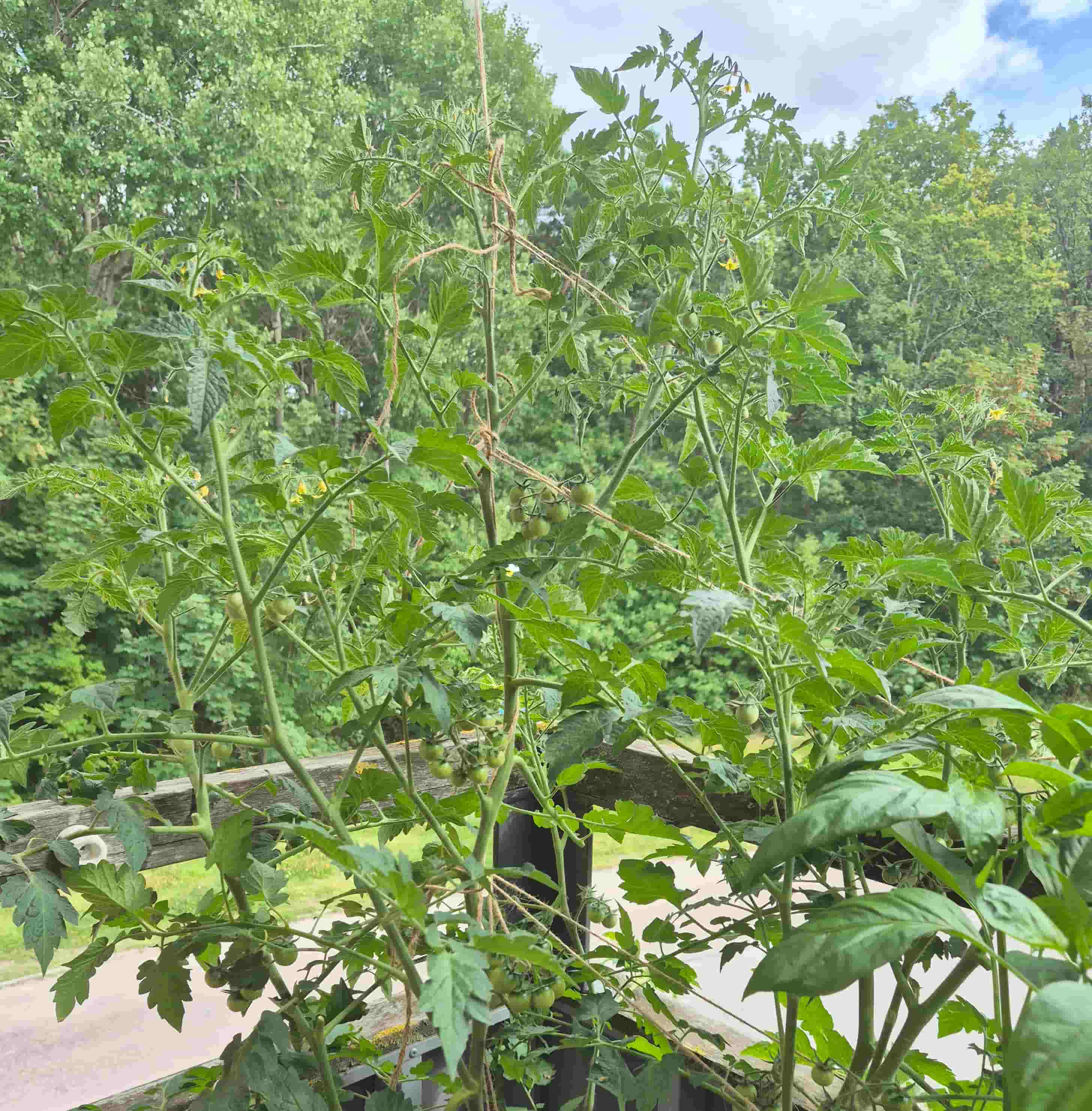
Pruning is, thus, essentially a precaution to keep diseases at bay, namely fungus and bacterial infections on the leaves. When growing in a small space, it also becomes the only weapon to keep the plants relatively contained.
It is worth mentioning that big plants don’t always correlate to big tomato harvests. Fruit production is an entirely separate issue, involving overall plant health, soil fertilization and flower pollination. This has been a hard lesson for me to learn, but you can, in fact, have a beautiful plant in your garden, growing like crazy, but get only a handful of fruits for your labour… But I will tackle some of these issues as well towards the end of this post.
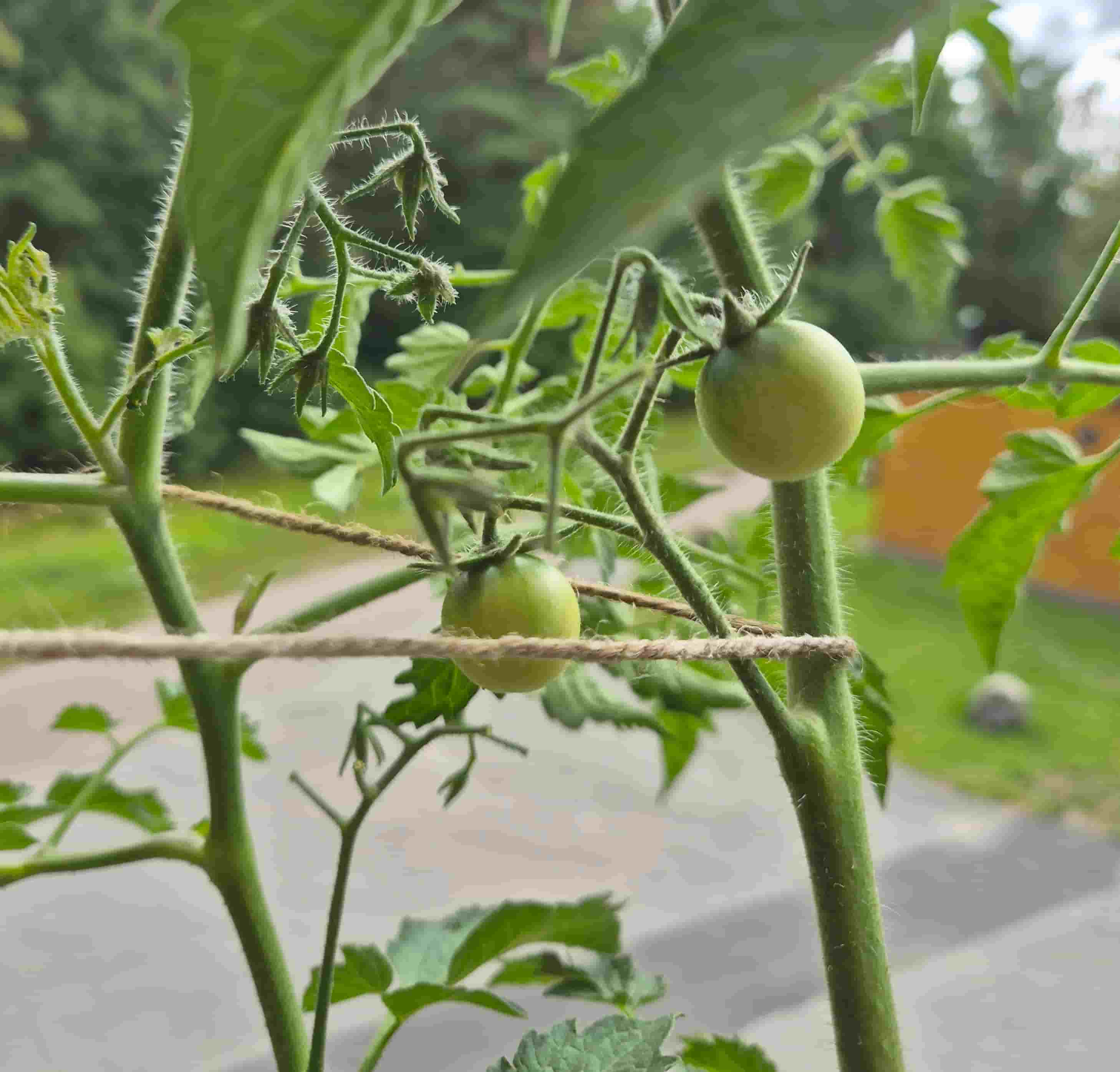
Now I hope you remember the main lesson from “The Most Rewarding Experiment So Far” blogpost, which are the types of tomato plants you can have: indeterminate,determinate and dwarf. It is very important to correctly identify your tomato’s growth type, so you can know if you should prune it more intensely or not.
Dwarf and determinate tomato varieties grow all the foliage first, up to a certain reasonable hight, and then tend to have their blooms all at the same time. Consequently, all the fruit usually ripens simultaneously and the plants are done for the season. Indeterminate varieties, on the other hand, grow all throughout the season, as long as the temperature is to their liking and they get enough sun. The flowers also come up in clusters along the growing stems, and the tomatoes follow in the same fashion.
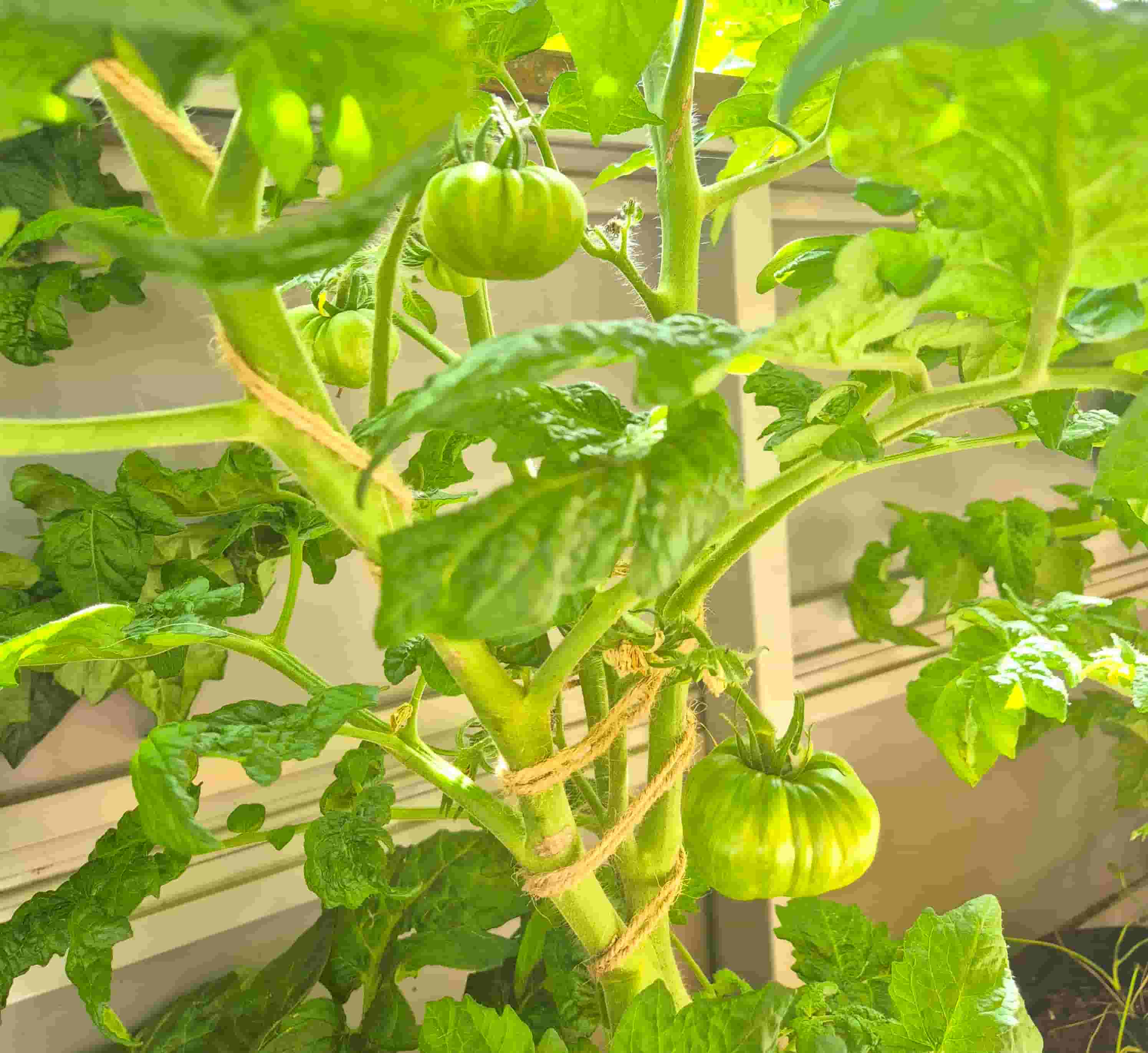
For all my tomato plants, regardless of their growth, I always prune the bottom leaves off. Anything threatening to touch the soil gets trimmed off. Most diseases are actually in the soil and spread to the plant by water splashing the soil onto lower leaves during watering. So this is very good practice overall. Not just with tomatoes, I would say.
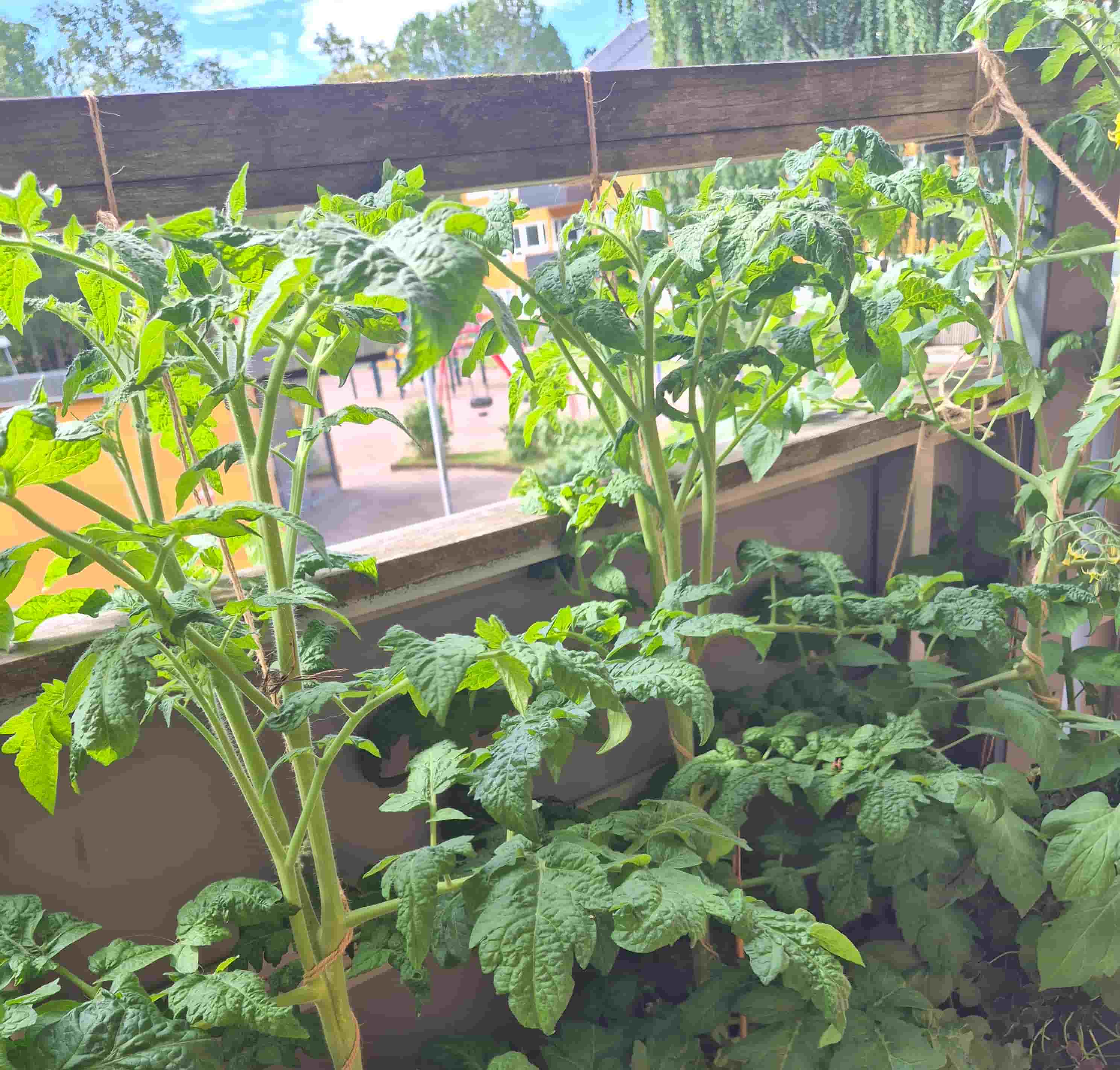
Because I’m growing indeterminate varieties on a balcony (my Honey Drop cherry tomato is a must), I keep it heavily pruned and only allow for a reasonable amount of growing stems, also referred to as suckers (see image bellow) to stay on the plant. Enough to still have a good amount of tomatoes out of it, but also keeping the plant contained to its corner on the balcony and not vining onto the plants standing next to it or past the balcony rail where it would actually be dangerous for me to even collect tomatoes from.
This year I found the most peculiar looking tomatoes at the grocery store around the beginning of May. After a google image search, they seemed to be an open pollination tomato type: “Accordion Cherry Tomato”, which is a very fitting name. They were so delicious and sweet that I decided to save seeds and try to plant it as another indeterminate variety on the other corner of my main balcony. This is where I was originally planning to put my Tomatillo plant, but eagerness beats planning any day for me.
So this tomato plant is even harder to contain than the Honey Drop. It clearly wants to vine sideways and not so much upward, which I’m guessing it’s a very good characteristic for agricultural production, as it can be grown (seems to me, at least) similarly to a grape vine for wine. Since I have other pots right next to it though, in my conditions, it means heavy pruning and vertical “encouragement”.
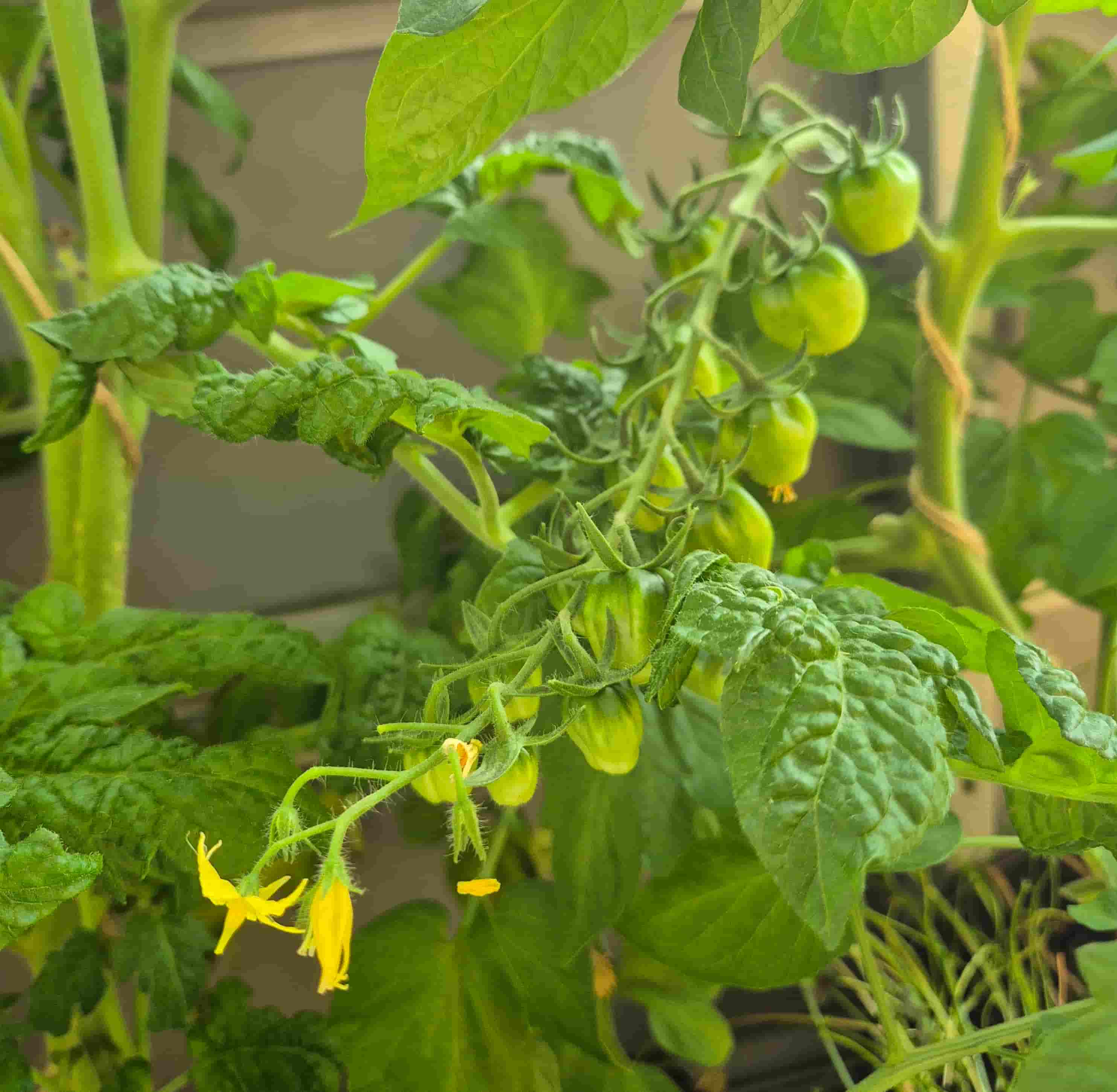
In an ideal world, because these are cherry tomato varieties, you would want to give them enough space and support to vine out as much as possible. More vines mean more growing stems, which mean more flowers and fruit. Whenever you prune a tomato sucker off, you’re essentially throwing away the possibility of getting more yield of one plant. But worry not, there are many, many more suckers lurking in the shade,and they will never stop coming.
That is perhaps the biggest struggle with growing indeterminate tomatoes, the sheer amount of time you will need to prune them back, as they grow so fast in the peak of summer. I need to check them every week currently, to keep suckers off from getting too big to the sides of the plants or invading my walkway effectively barricading me from my own house.
The actual procedure itself couldn’t be easier. Disinfect your gardening sheers (or scissors, as I’ve done in the past as well) with 70% ethanol. Then inspect your plant for suckers and evaluate which ones to keep or not. Take into account that they will continue growing towards the direction they are already in, potentially getting tangled into other plants next to it. Once you’re done with the suckers, check for any bottom leaves touching the soil, and cut those off.
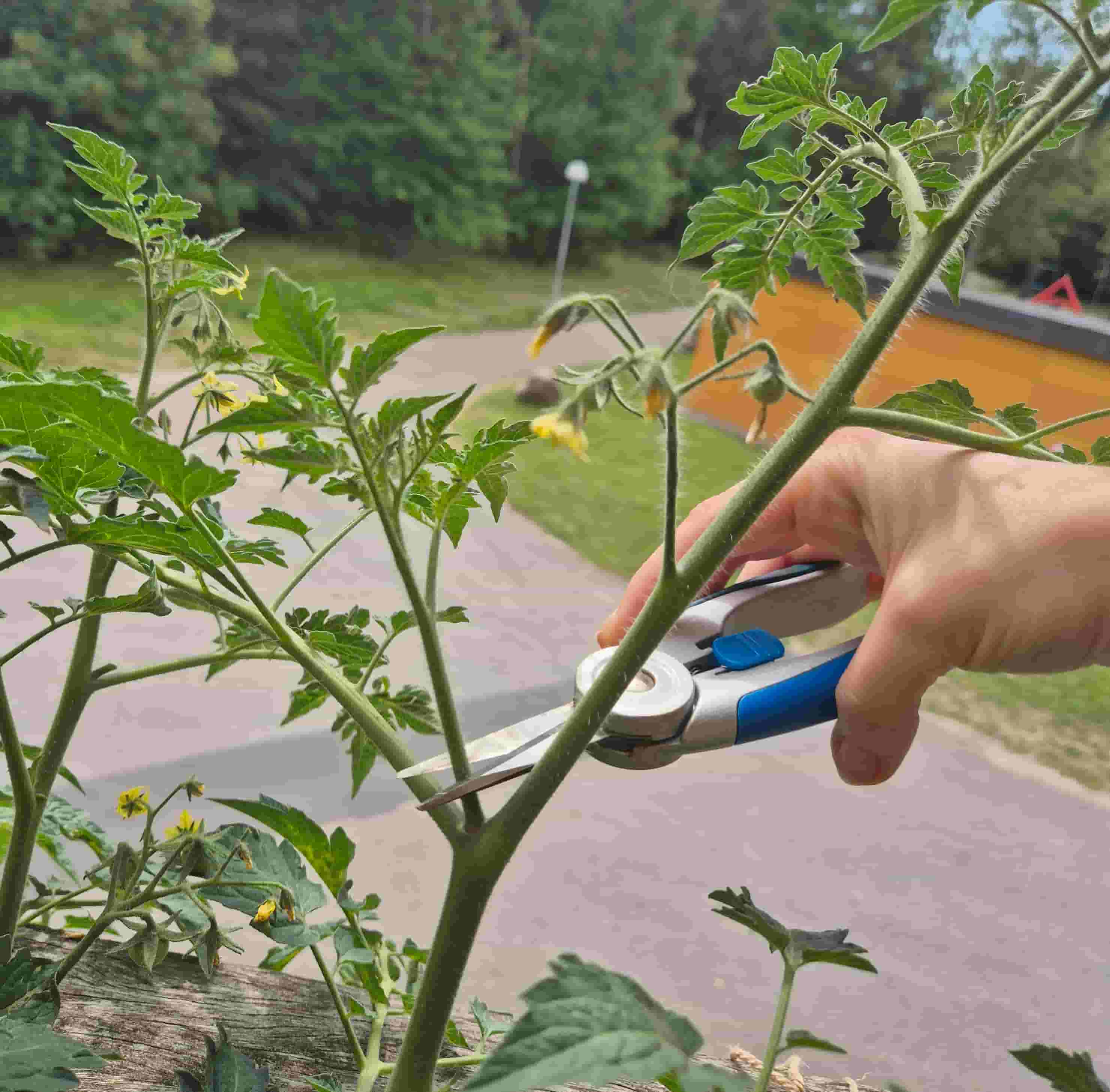
In the case of determinate, dwarf or Dwarf Tomato Project plants, pruning of suckers would actually detrimental, so it’s best to leave them all be, and just do light trimming of dead/sick looking leaves. In any climate, it’s also important to support your tomato plants, as strong winds might cause them to break or fall of top of each other. There are several methods to do this, and a quick internet search is most likely give you all the inspiration you need.
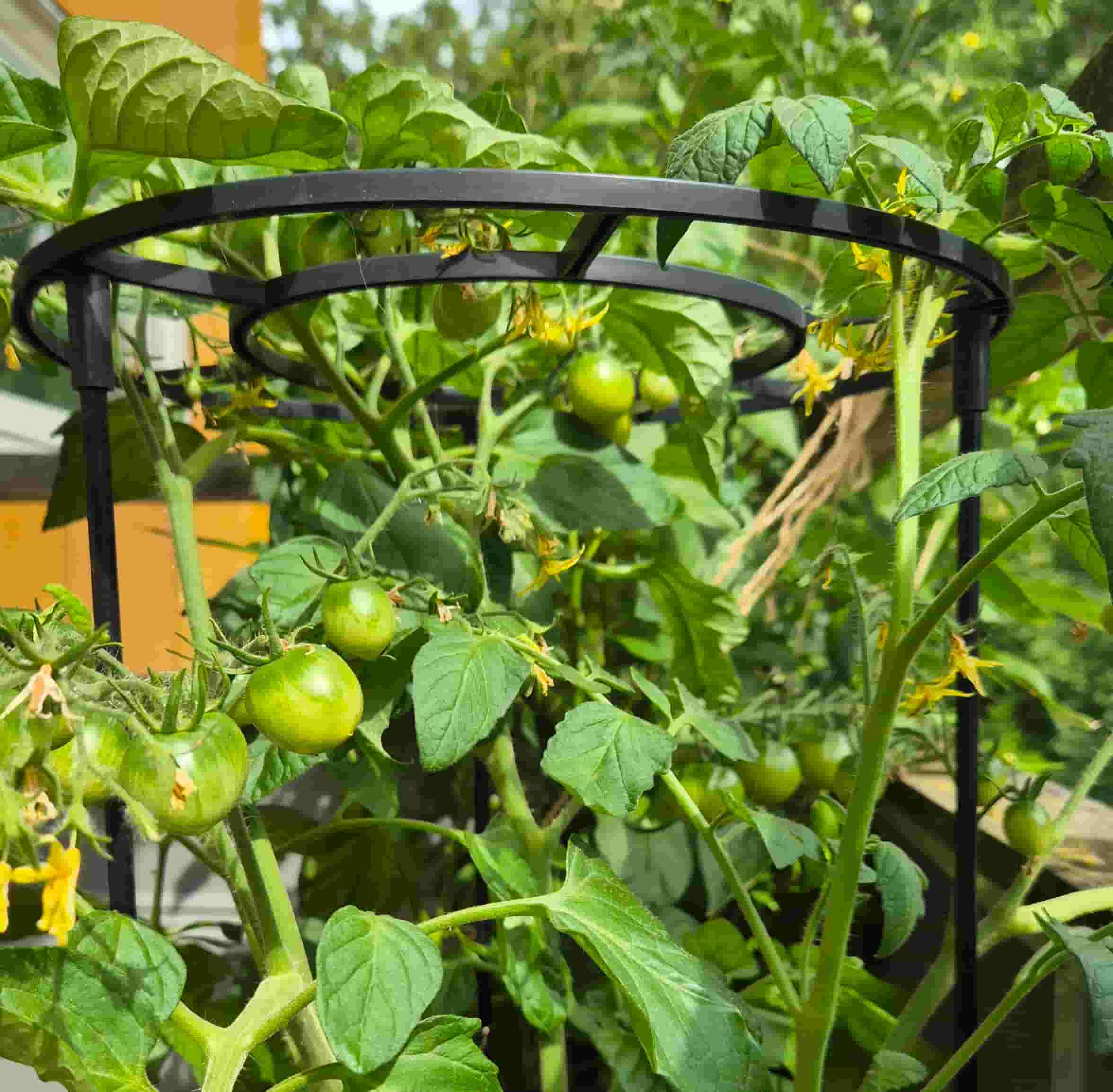
Finally, to get actual fruit off your plants, it’s imperative that you maintain a good fertilizing routine for your garden. I like to apply a solid fertilizer to the soil once I start to see actual fruit development; and a liquid fertilizer diluted in my watering can once a week since the moment I start spotting flowers. For more information on this, check my “Troubleshooting your garden, when disasters strike” blogpost.
 Subscribe to my RSS Feed!