My flowers bring all the pollinators to the yard
I started growing vegetables with the intent, first and foremost, of eating them. At the very least, the plants needed to be useful in cooking, like herbs, or be able to be used for teas, for example camomile. It made zero sense to me “waste” my very limited growing space, on something as useless and purely aesthetic as flowers.
I was more than convinced that there would be enough flowers on the vegetable plants to attract pollinators. Especially considering a city setup, surely the bees and flies would be more than thankful to have any kind of flowers available to them.
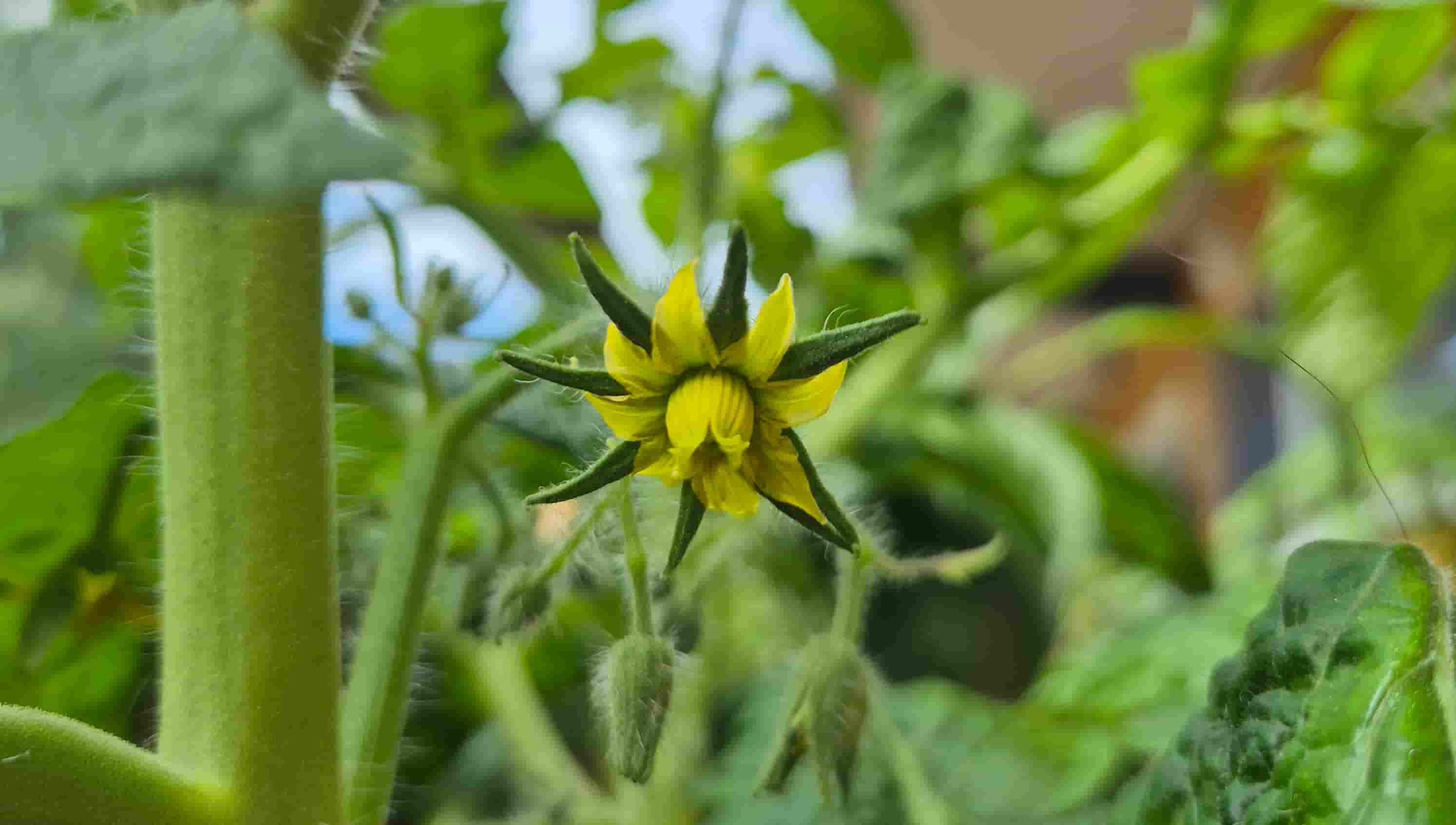
Well, turns out pollinators are pickier than an average human toddler, and will happily disregard unique, hand crossed, beautiful tomato and pepper flowers, for any showoffy and stronger perfumed ones.
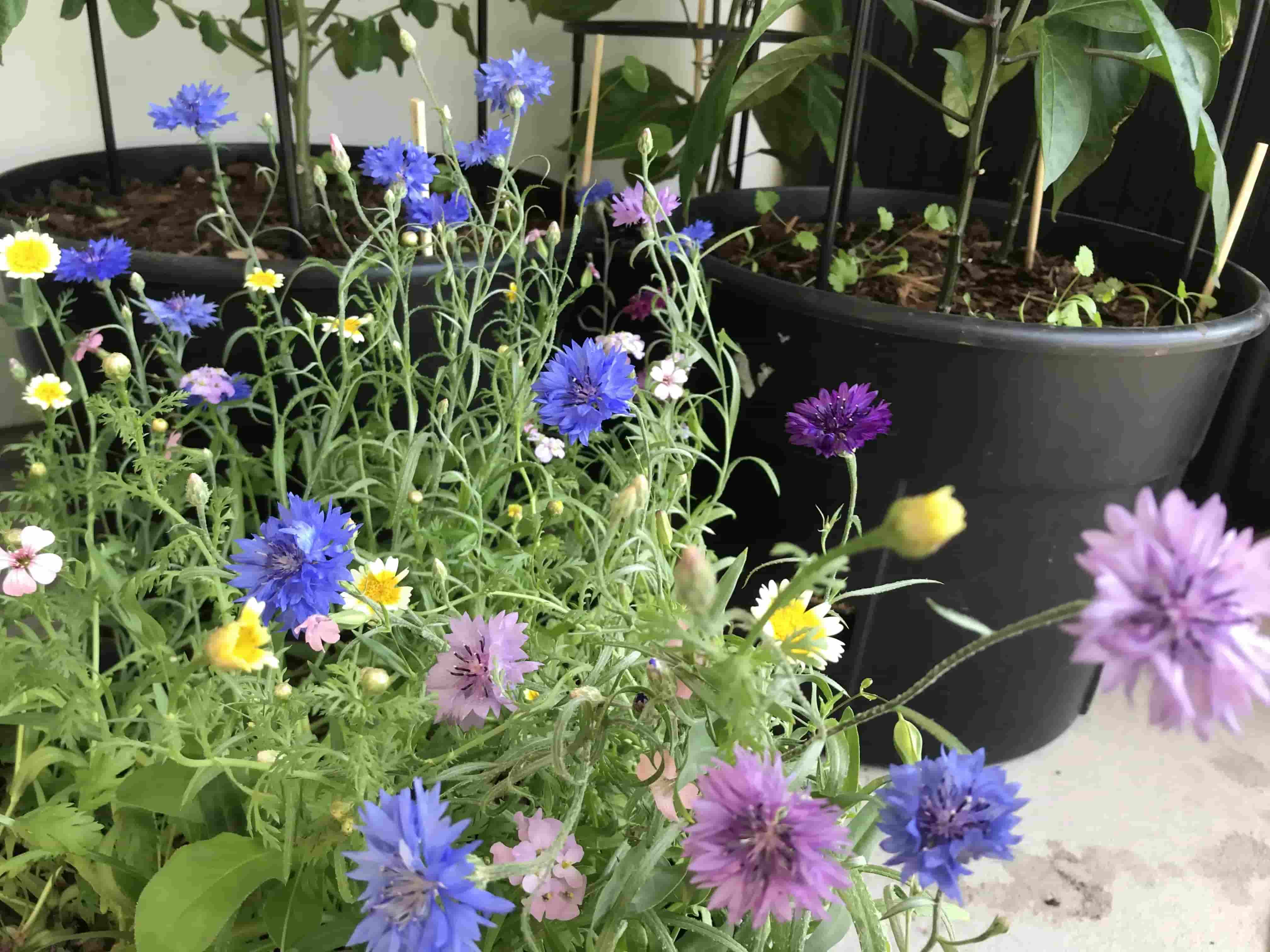
I learned this, of course, the hard way. On our first apartment with a balcony, pollinators were actually very scarce, and I noticed this very quickly as my precious tomato flowers kept falling off without being successfully pollinated. And no amount of bee reenactment on my end could possibly keep up with all the plants I had. And so I reluctantly realized that I better try harder to attract whatever pollinators I could with a pot planted with a wild flower seed mix (the picture you see at the top of this post).
For some reason, starting flowers from seed has not worked super well for me. It’s not completely unsuccessful, but I must say, they just don’t excite me that much… So much so,that I actually prefer to fully support my garden center when it comes to this, and purchase full grown flowers that I can just repot wherever I want.
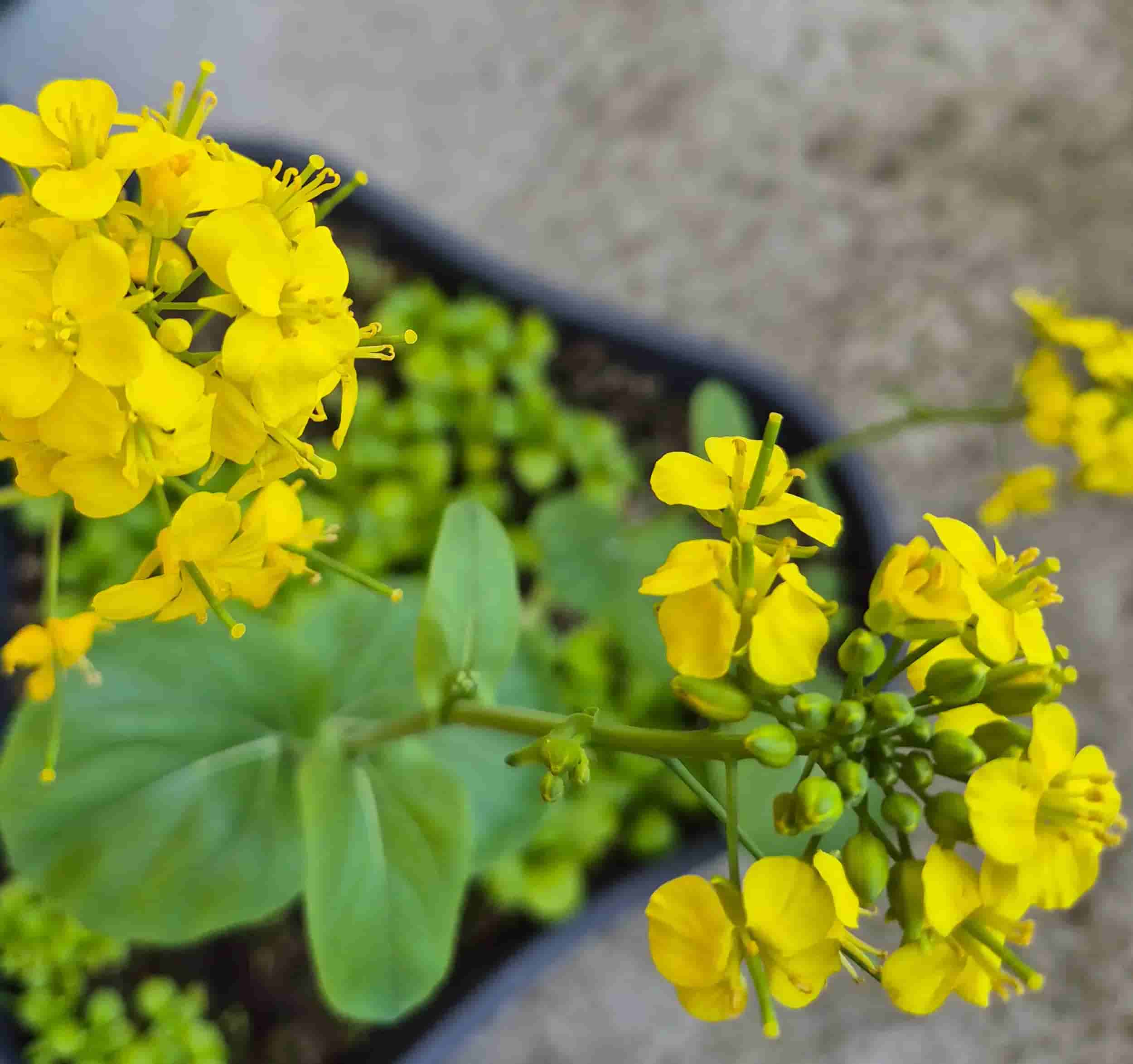
Alternatively, a very cool and unexpected consequence of herbs and salad greens bolting on you in the heat of the summer, is that pollinators go crazy for those flowers. That is a win win situation in my book. First, plant and enjoy your greens, and then, let them flower and make the bees happy! Let’s be honest, there’s not a lot more time to grow anything else in the 2 months of Swedish summer anyway, so it’s not like you’re wasting space.
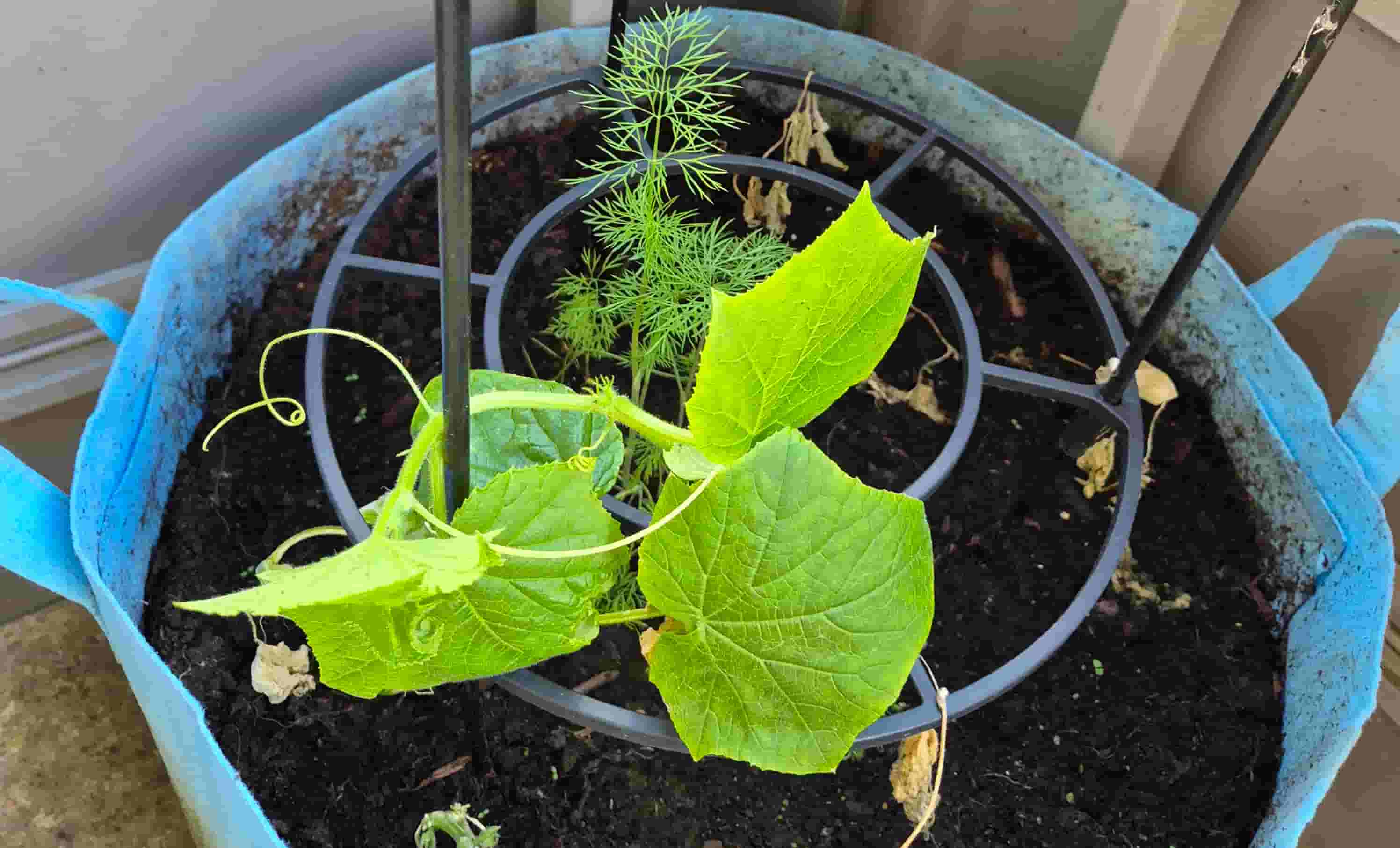
Another helpful tip regarding flowers is to use them almost as a cover crop in the pots where you already have vegetables growing in. Choose smaller varieties, that fit well in the empty spaces of your pots, and with time they will establish and protect the soil from drying out too fast, or getting too compact. My top suggestions for these kinds of flowers are dwarf marigolds (although I hate their smell), dwarf carnations, chrysanthemums, lavender and dwarf aster flowers.
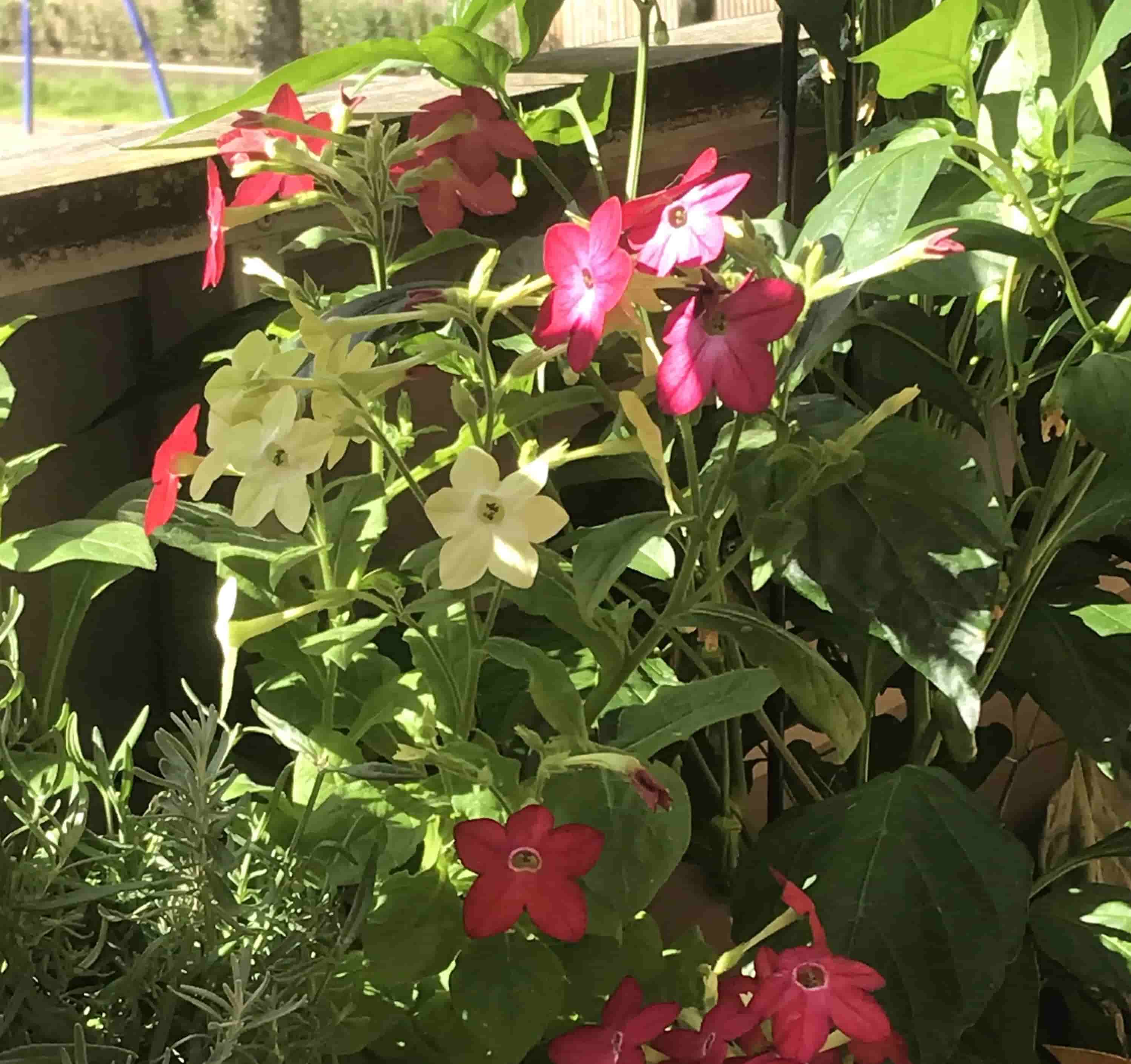
A very pleasant flower experiment in my garden were tobacco plants. A friend had told me that their sticky leaves were very good for attracting and capturing pests, like aphids and spider mites. And they gifted me a couple of starts. It had been a mixed seed packet, and so the flowers from each plant were a different color, and made for such beauty on my garden balcony! Another plus, was the trumpet like shape of the flowers which made for a very cozy spot for pollinators to just chill and take a break from all their buzzing around.
These are my main takes regarding flowers, but there are many more to consider. Some specific varieties also attract pest predators, like ladybugs, which will keep your aphid infestation in check. Some pests absolutely hate certain flower varieties, and they alone are enough to deter them from climbing your precious pepper plants.
Finally, I can only leave you with the conclusion from my “to bee or not to bee” experiment, which is that there is no way that you, as the human I hope you are, can do the work of the pollinators in your garden, no matter how small it is. So think of those little workaholic buggers, and make some space in your gardens for them!
 Subscribe to my RSS Feed!